
Sellvia and Systeme.io both try to reduce the number of tools needed to run an online business, but they remove work from different parts of the job. Sellvia is strongest when the missing pieces are the store, the product catalog and the operating framework. Systeme.io is strongest when the offer already exists and the missing pieces are funnels, email and automation. The more useful comparison is therefore not “which platform has more features?” but which one leaves less of the important work on your desk after signup.
Sellvia
For a beginner who does not already own a product, audience or marketing system, Sellvia removes more of the work that has to happen before there is an actual digital-product business to operate. That makes it the slightly stronger all-in-one starting point for the specific use case in this comparison.
Funnels + owned marketing
Systeme.io is the better platform when the offer is already yours and you want granular control over lead capture, email sequences, workflows, upsells, courses and affiliate-led acquisition.
The distinction matters because Systeme.io has expanded beyond the old “funnel builder” label. Its current product includes Creator Stores where users can sell digital downloads and courses directly, alongside its established funnels, email, workflows and checkout tools. Treating it as if it cannot run a storefront would now be inaccurate. The question is what it asks the operator to provide: Systeme.io gives you infrastructure for your offer; Sellvia gives you more of the offer-and-operation layer before you start marketing it.
If you want the platform-wide details rather than the comparison-specific analysis, our detailed Sellvia review covers its pricing, operating model, strengths, limitations and user ratings. That page is the main reference point for Sellvia on Ecom Ratings; here, the narrower job is to determine whether its version of “all-in-one” makes more sense than Systeme.io’s.
Short answer: choose Sellvia when you want a more prepared digital-product ecommerce operation and do not already have an offer of your own. Choose Systeme.io when you already know what you are selling and want a deeper system for turning traffic into leads, customers and repeat buyers.
Two Different Kinds of “All-in-One”
They remove work from different parts of the business.
Business Operation First
Marketing System First
Quick Verdict: Sellvia vs Systeme.io
| Decision area | Better fit | Why it matters |
|---|---|---|
| Starting without your own product | Sellvia | The catalog and store framework remove the need to create the underlying digital offer before you can begin operating. |
| Prepared ecommerce workflow | Sellvia | The platform is organized around the store, products, orders, reporting and the operating tasks surrounding them. |
| Sales funnels | Systeme.io | Funnels are dedicated objects with ordered steps, conversion pages, order forms, upsells and related marketing logic. |
| Email and automation | Systeme.io | Campaigns, tags, rules and visual workflows are a core part of the product rather than a supporting feature. |
| Selling your own existing offer | Systeme.io | Creator Stores, digital products, courses and funnels let the operator package and sell an offer they already own. |
| Fewer pre-launch business decisions | Sellvia | The operator still has to choose what to promote and how, but product creation and the basic store framework are not blank-page tasks. |
| Lowest software entry cost | Systeme.io | The permanent Free plan makes it possible to validate the software before paying for a subscription. |
| Marketing customization | Systeme.io | More of the acquisition journey is exposed as configurable funnels, automations, campaigns and contact logic. |
| Beginner with no offer, list or funnel | Sellvia | For this narrow starting condition, it reduces more of the work required before the user has something commercially usable. |
For category scores and ratings, you can also compare Sellvia and Systeme.io side by side. For a broader look at Systeme.io outside this head-to-head, see the Systeme.io platform review.
The Better Question: Which Work Does the Platform Remove?
A typical SaaS comparison treats features as inventory. Funnels: yes or no. Email: yes or no. Storefront: yes or no. Courses: yes or no. That approach is convenient, but it disguises the most important difference between Sellvia and Systeme.io.
An online business has several jobs that must happen whether the software exposes them as buttons or not. Someone has to decide what the offer is. Someone has to put it in front of a buyer. Someone has to convert the visit into a purchase. Someone has to handle the order, delivery, reporting and the next round of optimization. If the platform does not absorb one of those jobs, the operator absorbs it.
When I mapped those jobs instead of the marketing pages, the comparison became much cleaner. Sellvia removes more work at the beginning of the chain. The store framework and catalog mean the operator does not have to create the underlying digital product from scratch before anything else can happen. Systeme.io removes more work in the middle of the chain: lead capture, funnel sequencing, email follow-up, automation and conversion logic can all live inside one system instead of being spread across separate tools.
That difference is more useful than calling one platform “ecommerce” and the other “marketing.” Systeme.io now has real commerce capabilities, including Creator Stores and native digital-product selling. Sellvia also has marketing tools. The distinction is the center of operational gravity: where the platform is doing the most work for you by default.
Sellvia absorbs more of the start
Store structure, access to a ready-to-sell digital catalog and an ecommerce-oriented dashboard arrive as part of the operating environment. The user still chooses what to emphasize and how to promote it, but the first commercial object is not an empty product form.
Systeme.io absorbs more of the selling system
The operator brings or creates the offer, then gets unusually deep control over how prospects discover it, enter a list, move through campaigns, see checkout pages, receive upsells and trigger follow-up workflows.
Who Does the Work?
A practical look at which platform absorbs each job.
A Normal Week Reveals More Than a Signup Demo
Many platform comparisons focus on the first hour after signup. That is useful for measuring onboarding, but it can overvalue whatever looks impressive in a fresh account. A better test is what the software asks you to think about repeatedly after the novelty is gone.
What the weekly loop looks like on Sellvia
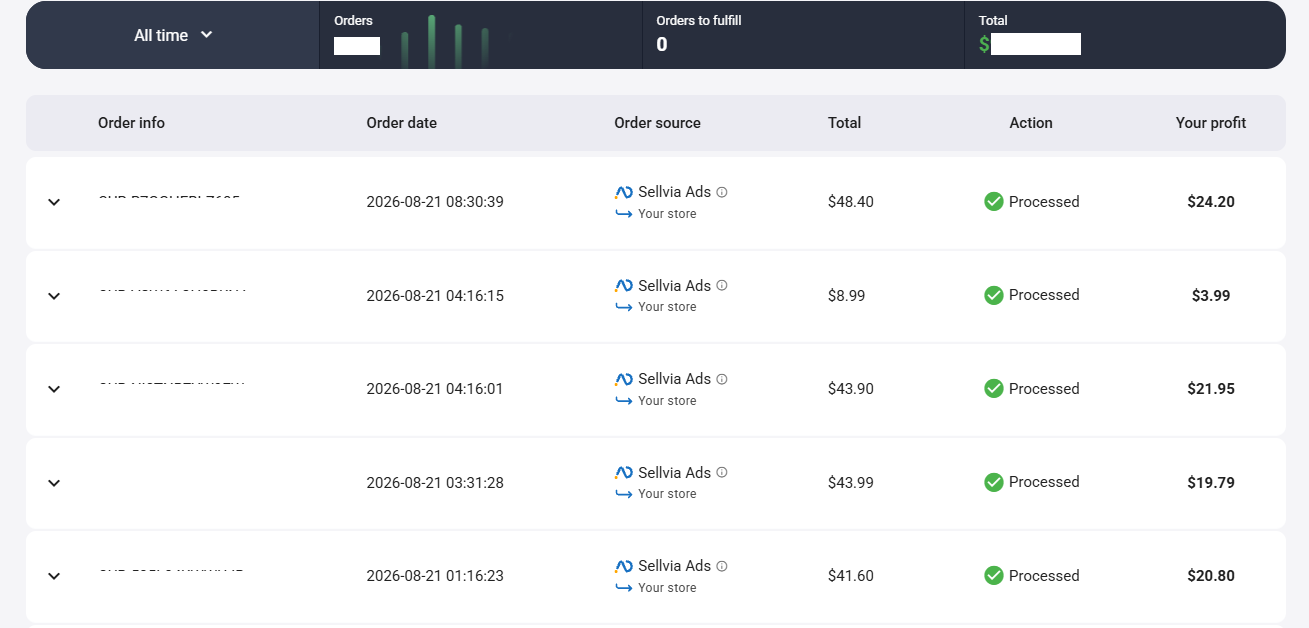
Sellvia’s operating loop is commerce-centered. The recurring questions are closer to: which products are receiving attention, what traffic is being purchased or generated, how orders are moving through the account, what the current economics look like, and whether the store needs different promotion or merchandising decisions. The platform is trying to compress those operating tasks into a guided environment.
That does not mean Sellvia operates the business automatically. The current terms explicitly avoid guaranteeing revenue, profitability or acquisition outcomes. Advertising and optional service layers create costs, and the operator still has to watch the relationship between spend and results. But the cognitive load is different from starting with a general marketing platform because the user is optimizing a business framework that already exists rather than first designing the business model inside the software.
What the weekly loop looks like on Systeme.io
Systeme.io’s recurring questions are more likely to be: which funnel is converting, which campaign is underperforming, which tag or workflow should change, where contacts are entering, whether a new upsell is worth testing, and how a course or offer should be packaged. That is a very powerful operating environment when marketing itself is the competence the owner wants to control.
It also exposes more decisions. A blank or lightly configured Systeme.io account does not know what your offer should be, what promise should go on the page, what sequence should follow the opt-in or why a visitor should trust you. The product gives you a high-quality set of instruments, but the operator is still composing the music.
The practical distinction
Sellvia asks: how are you operating and promoting the business you have been given access to?
Systeme.io asks: what selling system do you want to build around the offer you bring?
That is why Sellvia can make more sense for a true beginner even though Systeme.io is clearly more capable in several individual marketing categories.
Products and Storefront: Systeme.io Has Caught Up More Than Older Reviews Admit
One of the easiest mistakes in a Sellvia vs Systeme.io comparison is to describe Systeme.io as if every transaction must happen through a hand-built funnel and there is no store concept at all. That is outdated. Systeme.io now documents Creator Stores where a user can create a branded store, organize sections and sell digital downloads, courses and other offer types directly. That materially narrows the old storefront gap.
The important difference has moved upstream. Systeme.io can provide the container; the operator still provides the commercial substance. A user can create a digital download, attach a price, connect payment methods and publish it in a Creator Store, but they still need to create that download, own the course, define the offer and decide why it deserves to exist.
Sellvia approaches the same starting problem from the opposite direction. Its current digital-product model gives subscribers access to a catalog built by Sellvia, including guides, ebooks, online courses and other informational products. That means a beginner can evaluate products and promotional choices without first spending days or weeks producing the underlying material.
This is where Sellvia earns its main advantage in this comparison. It is not that Systeme.io “cannot sell products.” It clearly can. It is that Systeme.io begins with your product, while Sellvia can begin before you have one.
Important limitation: ready-made does not mean decision-free. A Sellvia user still has to decide which products to emphasize, how to position the store, what traffic to pursue and whether the economics make sense. The platform reduces product-creation and setup work; it does not remove market judgment.
Traffic: Guided Promotion vs Owned Acquisition Machinery
This is the section where Systeme.io should win clearly, because pretending otherwise would make the comparison less credible. Systeme.io gives the operator a deeper toolkit for building an acquisition system they control: funnel pages, opt-ins, tags, campaigns, workflows, payment pages, upsells and affiliate tools can all work together around a single offer.
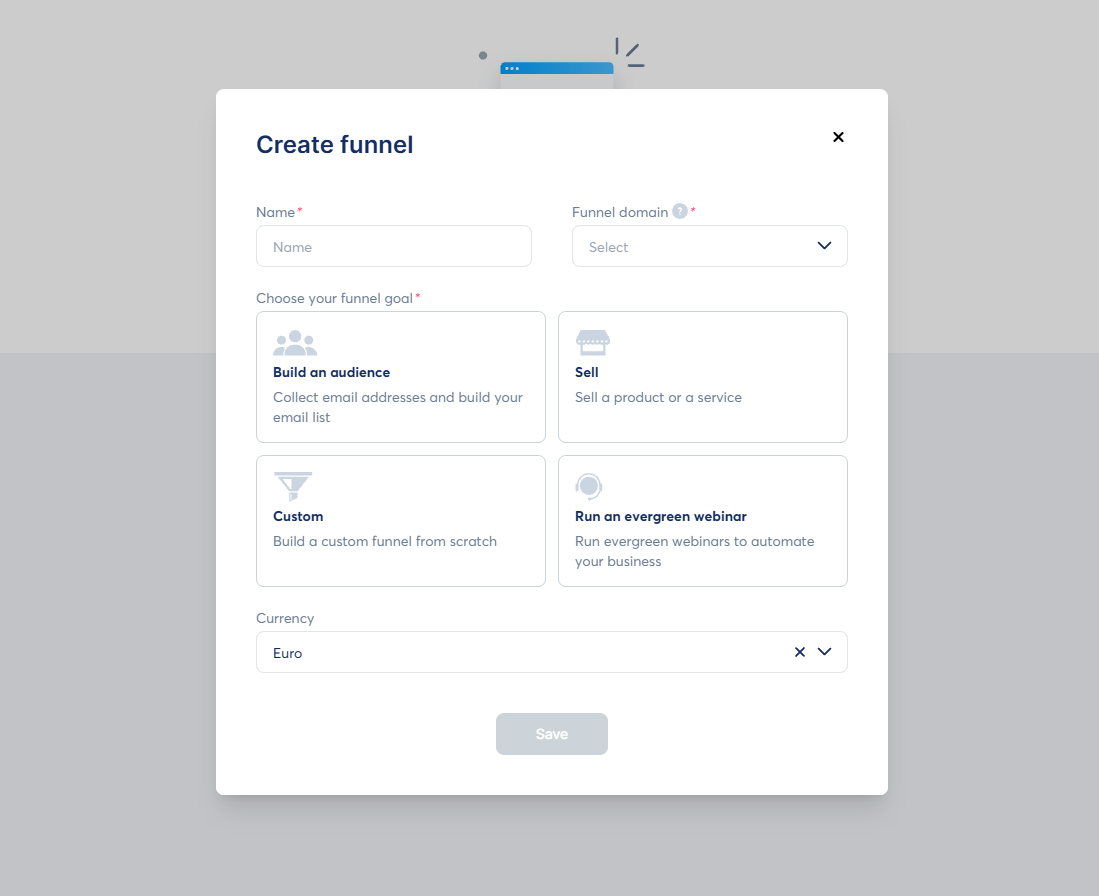
It also supports the technical layer expected by performance marketers. For example, Systeme.io documents adding Meta Pixel events to funnel pages and applying tracking across a funnel. In other words, the platform assumes the operator may arrive with a traffic strategy and wants control over how that strategy is measured and converted.
Sellvia’s approach is more guided. Its current service structure includes built-in promotional tools and optional paid promotion layers, with the account focused on running promotion around the store rather than requiring the user to construct a full marketing automation architecture from scratch. For the beginner this can be a benefit: fewer systems need to be designed before traffic is tested. For the experienced marketer it can feel more constrained.
There is also a financial difference. Systeme.io can give you sophisticated marketing software without charging a platform subscription on its Free tier, but it does not make acquisition free. A free funnel that nobody visits is still a zero-revenue funnel. The user has to bring distribution through paid ads, organic content, partnerships, an existing audience or affiliates. Sellvia can reduce some of the marketing setup burden, but traffic and promotion still have real operating costs there as well.
So the clean verdict is: Systeme.io is better if acquisition strategy is something you want to design; Sellvia is better if acquisition is something you would rather approach through a more guided ecommerce environment.
Email and Automation: Systeme.io Wins on Depth
Systeme.io’s strongest advantage is not one feature but the way several marketing objects connect. Contacts can enter campaigns. Tags can represent states or actions. Workflows can begin from triggers such as a purchase or signup and then perform follow-up actions. Funnels can feed those contacts into the system, and course or product activity can become part of the same lifecycle.
That is far beyond basic “send a promotional email” functionality. A seller who understands lead magnets, segmentation, nurture sequences and conversion paths can build a much more expressive marketing system in Systeme.io than in Sellvia.
Sellvia’s current Performance Tiers can include an Email Marketing Tool and other promotional tools depending on tier and account configuration, but that should not be confused with Systeme.io’s entire marketing architecture. In Sellvia, email is one component supporting the commerce operation. In Systeme.io, email and automation are part of the skeleton of the product.
For an established creator, that difference may be decisive. If someone already has a $99 course, an audience and three distinct lead sources, Systeme.io gives them the tools to create different follow-up paths without moving between a funnel builder, email service and course platform. Sellvia’s ready-made catalog is not solving the problem that person has.
The Marketplace Comparison Is More Nuanced Than “One Has It, One Doesn’t”
Older comparisons often claim that Systeme.io has no internal marketplace. That is no longer accurate. Systeme.io operates a Marketplace where offers can be published for affiliates to discover and promote. The important distinction is what kind of discovery each ecosystem is designed to produce.
Systeme.io’s Marketplace is primarily a distribution layer between merchants and affiliates. A seller publishes an offer, affiliates can find it, and the platform’s affiliate infrastructure helps connect promotion with the offer. That fits Systeme.io perfectly: the product remains yours, and the platform improves the machinery around marketing it.
Sellvia’s ecosystem is more closely tied to the commerce operation itself. Depending on the account and storefront model, Sellvia can connect product presentation and Sellvia-managed ecommerce infrastructure rather than functioning simply as an affiliate directory. The details are governed by the current account configuration and terms, so it is better not to reduce this to an identical “marketplace” checkbox.
The broader lesson is the same as elsewhere in this comparison: Systeme.io extends your distribution system; Sellvia extends the prepared operating environment. Both can create exposure, but they do not create it in the same way.
Checkout and Conversion: Store Purchase vs Designed Sequence
Both platforms can take a payment for a digital offer, but Systeme.io gives the operator more control over what happens immediately before and after that payment. Its funnel order forms can sit inside a sequence that includes opt-in pages, sales pages, upsells, downsells and follow-up automation. For someone optimizing average order value or testing a structured sales path, that matters.
Sellvia’s checkout belongs more naturally to the ecommerce operation. The seller is managing a store and its products rather than treating every transaction as one node in a custom funnel map. That is simpler conceptually for a shopper-oriented store, but less flexible when the marketer wants to design a precise sequence around every segment.
Neither approach is inherently more advanced. They optimize different behavior. A store-based flow reduces friction for buyers who want to browse and choose. A funnel-based flow reduces distractions for sellers who want the visitor to follow a designed path. Systeme.io is better at the latter. Sellvia is more coherent for the former.
Pricing: The Cheapest Software Is Not Always the Shortest Route
On headline software price, Systeme.io wins. Its current primary pricing page lists a permanent Free plan for up to 2,000 contacts, followed by Startup at $17/month, Webinar at $47/month and Unlimited at $97/month. Systeme.io also advertises unlimited email sends and 0% platform transaction fees across the plans, although normal payment-processor charges still apply.
Sellvia’s current terms describe Sellvia PRO plans starting at $39/month for Basic, with higher Advanced and Ultimate levels. A 14-day trial applies to Sellvia PRO under the current terms. Sellvia also offers optional Performance Tiers that are billed separately and can add promotional and operating tools; those tiers can materially increase recurring cost beyond the base subscription. Advertising and other optional services create additional cost layers as well.
If the question is simply “which subscription costs less?”, there is no contest: Systeme.io. But that is not the full economic decision for the audience this article is addressing.
A user starting with Systeme.io and no existing business still needs an offer. That may require product-development time, expertise, research, design, recording, editing or buying other services. They also need positioning, traffic and a conversion strategy. None of those costs appear on the Systeme.io pricing page because they are not software fees.
A Sellvia user pays more for platform access and may pay substantially more once advertising or optional tools are included, but the platform reduces a different cost: the time and uncertainty involved in assembling the initial digital-product operation. The value is therefore not “$39 gets everything.” It does not. The value is that a larger share of the starting structure already exists.
Software-cost winner: Systeme.io. Lower business-assembly burden for a beginner without an offer: Sellvia. These two statements can both be true, and keeping them separate makes the comparison much more useful than simply putting monthly prices in adjacent columns.
What Happens After the First 100 Sales?
The first sale tells you whether checkout works. A larger volume tells you whether the operating model fits the owner.
For a Systeme.io business, growth tends to increase the importance of segmentation and marketing structure. More products can mean more funnels, tags, campaigns, automations and customer states. The platform is well suited to that complexity because those are exactly the objects it was built to manage. A sophisticated operator can use the added control to improve conversion and lifetime value rather than treating complexity as a burden.
For a Sellvia business, the recurring pressure is more operational: product selection, promotion, order activity, reporting and the economics of the account. Because the environment is more opinionated, the user has fewer marketing-system decisions to make, but they are also working inside more platform-defined rules.
This is where “outgrowing” each platform means something different. You may outgrow Sellvia when you want far greater control over the underlying offer, brand, acquisition stack and lifecycle marketing than its prepared model is designed to provide. You may outgrow a simple Systeme.io setup when the business needs specialist capabilities that justify replacing parts of the all-in-one system with dedicated tools — although the Unlimited plan gives the platform considerable headroom before that happens.
For the intended beginner, that future flexibility is worth knowing about but should not dominate the initial decision. A platform that can theoretically support a more custom marketing stack later is not automatically the best place to start when the user does not yet have a product to put into that stack.
Control, Ownership and Platform Dependency
Sellvia’s convenience comes with a real trade-off: more of the business model depends on Sellvia’s ecosystem. Current terms state that Sellvia’s digital catalog products are created by Sellvia and that Sellvia retains the relevant rights to those materials. That is an important distinction from a creator bringing an independently owned course, ebook or software product to Systeme.io.
The trade-off should not be exaggerated into “good” versus “bad.” Dependency is what makes part of the setup disappear. When a platform supplies the catalog and operating environment, the user does not have to build those assets from scratch, but they also accept more platform-defined rules around the system. That is often a rational exchange for a beginner.
Systeme.io transfers more responsibility — and therefore more control — to the operator. The user decides what the product is, how it is branded, how it is priced, what the funnel says, what email follows the purchase and how the audience is segmented. The platform provides the machinery, but the business logic is yours to create.
When I compare these two models, this is the trade-off I would pay the most attention to. Sellvia reduces decisions by making more decisions upstream at the platform level. Systeme.io increases flexibility by pushing more decisions downstream to the user. The “better” arrangement depends on whether those decisions feel like opportunity or overhead.
Could Sellvia and Systeme.io Be Used Together?
Conceptually, yes: a business can use one system for commerce and another for marketing. Plenty of online businesses run a store in one environment and handle email, landing pages or acquisition in another.
But there is an important limit to what should be claimed here. I could not verify a native, documented Sellvia-to-Systeme.io integration that automatically synchronizes products, customer records, checkout state and order data between the two. Without a verified integration, using both should be treated as a two-system workflow rather than one seamless stack.
That makes the combination more relevant later than on day one. A Sellvia operator who eventually wants deeper external email or funnel tooling could evaluate Systeme.io as a separate marketing layer. An established Systeme.io user, however, would not normally add Sellvia merely to obtain another storefront; the reason to consider Sellvia would be access to its prepared business and catalog model.
For a beginner trying to reduce complexity, starting with both would defeat much of the point of choosing an all-in-one platform in the first place.
Who Should Choose Sellvia?
Sellvia makes the stronger case when most of these statements are true:
- You want to start a digital-product ecommerce business but do not already have your own product.
- You value a prepared operating environment more than maximum funnel customization.
- You would rather evaluate and promote an existing catalog than spend the first phase creating a course, guide or download from scratch.
- You are comfortable operating inside a more platform-defined ecosystem in exchange for less initial assembly work.
- You want the ecommerce workflow — products, promotion, orders, reporting and operating decisions — to be the center of the experience.
This is also why Sellvia is the overall pick in this particular comparison. The target reader is not an experienced funnel marketer choosing between two campaign builders. It is someone asking which “all-in-one” approach makes more sense when the business itself is not yet assembled. For that person, Sellvia removes more of the earlier blockers.
Who Should Choose Systeme.io?
Systeme.io is the stronger choice when most of these statements are true:
- You already have a course, download, service, coaching offer or other product you want to sell.
- You understand or want to learn lead generation, funnels, email sequences and marketing automation.
- You want a permanent free plan to validate the software before paying.
- You want a Creator Store but also expect funnels and lifecycle marketing to become increasingly important.
- You want your own offer and marketing system to remain the center of the business rather than adopting a prepared catalog model.
- You expect affiliate promotion, segmentation, workflows, upsells or campaign testing to matter more than having products supplied for you.
Giving Systeme.io these wins is not a concession. It is exactly why the final Sellvia recommendation is credible. Systeme.io is the stronger marketing system. Sellvia wins the narrower beginner ecommerce decision because the difficult work for that buyer begins before marketing automation becomes useful.
Which Path Should You Take?
Start with what is missing from your business today, not with the longest feature list.
Starting without a product?
- No product or catalog yet
- Need a store and products ready
- Limited funnel-building experience
- Want fewer setup decisions before operating
The real decision
Which burden do you want the platform to remove?
Already have your own offer?
- You own a course, service or digital product
- Need advanced funnels and automation
- Want control over audience and lifecycle marketing
- Plan to build a creator-led brand
Final Verdict: Which All-in-One Approach Makes More Sense?
The phrase “all-in-one” makes Sellvia and Systeme.io sound like substitutes. They are better understood as two different answers to the same frustration: I do not want to assemble ten separate tools before I can run an online business.
Systeme.io answers by consolidating the marketing stack. It gives an operator funnels, landing pages, checkout, email, workflows, courses, a Creator Store and affiliate infrastructure in one account. If you already own the offer, that is an unusually complete set of tools, and the permanent Free plan makes it easy to test.
Sellvia answers one step earlier. Its value is not that it beats Systeme.io at funnels or automation — it does not. Its value is that the user can enter without an existing product and still have a structured digital-product ecommerce environment to operate. That removes a category of startup work that Systeme.io deliberately leaves in the hands of the creator.
For an experienced creator, marketer or course seller, I would lean toward Systeme.io. The extra control over acquisition and customer lifecycle is more valuable once the offer already exists.
For a beginner with no established product, audience or marketing stack, Sellvia is the better overall starting point. It wins softly but clearly because it shortens the route to an actual ecommerce operation rather than merely giving the user an excellent set of tools with which to construct one.
If Sellvia is the direction you are considering, the next useful step is not another comparison. Our Sellvia rating and platform review goes deeper into the current pricing structure, operating model, limitations and user feedback so you can judge whether that prepared approach fits the way you want to run a business.
Compare the two platforms directly
Use the Ecom Ratings comparison view for category ratings, then open the Sellvia profile for the deeper platform analysis.
Open Sellvia vs Systeme.io comparison →Frequently Asked Questions
Is Sellvia better than Systeme.io?
For a beginner who does not already have a product, Sellvia is the stronger starting point because its prepared digital-product model removes more pre-launch work. Systeme.io is stronger for funnels, email automation and selling an offer you already own. The winner changes with the user’s starting point.
Is Systeme.io an ecommerce platform?
Yes, its current capabilities extend well beyond funnels. Systeme.io now offers Creator Stores where users can sell digital downloads and courses, and it also has native payment pages and order functionality. Its center of gravity remains marketing, funnels and automation rather than a supplied ecommerce business model.
Can Systeme.io replace Sellvia?
It can replace much of the software layer: storefront pages, checkout, digital-product delivery, funnels, email and automation. It does not replace Sellvia’s supplied digital-product catalog or its more prepared operating model. You still need to create or bring the offer you plan to sell.
Can Sellvia replace Systeme.io?
Not if deep funnel construction and marketing automation are central to the business. Sellvia has promotional and email-related tools, but Systeme.io gives much more control over funnels, tags, campaigns, workflows, upsells and lifecycle marketing.
Which is better for beginners?
If “beginner” means you have no product, audience or marketing stack, Sellvia removes more initial friction. If you already have an offer but are new to funnel software, Systeme.io can be the better beginner tool because its Free plan lets you learn the marketing system without a subscription cost.
Which is better for selling digital products?
Both can sell digital products. Sellvia is better when you want access to a ready-made catalog and a prepared ecommerce environment. Systeme.io is better when the digital product is yours and you want to control the storefront, funnel, email sequence and automation around it.
Which is better if I do not have my own products yet?
Sellvia. That is the clearest use case in which its all-in-one approach has an advantage, because product creation is one of the jobs the platform removes from the starting workflow.
Which is better for funnels and email marketing?
Systeme.io. Funnels, campaigns, tags and workflows are core platform objects and provide substantially more control over acquisition and follow-up than Sellvia’s more commerce-centered approach.
Does Systeme.io have a store now?
Yes. Systeme.io’s Creator Stores let users create a branded store and sell digital downloads, courses and other supported offer types. That is why describing Systeme.io as “funnels only” is outdated. The remaining distinction is that Systeme.io does not supply the underlying offer for you.
Does Systeme.io have a marketplace?
Yes. Systeme.io operates a Marketplace oriented toward offer discovery by affiliates. That is different from simply saying it provides shopper traffic to every store. The marketplace fits the platform’s affiliate-distribution model rather than replacing the seller’s broader acquisition strategy.
Can Sellvia and Systeme.io be used together?
They can be operated as separate commerce and marketing systems, but no native direct integration was verified for this comparison. Without one, expect additional operational work rather than automatic syncing between the platforms.
Sources and verification
Features and pricing that can change were checked against primary platform documentation on August 21, 2026. The article deliberately avoids relying on older third-party comparisons for current product capabilities.
- Sellvia Terms of Use — current PRO plans, Performance Tiers, digital-product rights and service terms.
- Sellvia: Selling Digital Products — current digital-product positioning.
- Systeme.io Pricing — current Free, Startup, Webinar and Unlimited plan structure.
- Systeme.io Creator Store documentation — store creation and supported product types.
- Systeme.io Workflows documentation — automation triggers and actions.
- Systeme.io Order Form documentation — funnel checkout and digital-product offers.
Editorial note: platform features, eligibility rules and pricing can change. Re-check live checkout terms before purchasing either service.